
FIT-FIRST SNORKEL GEAR GUIDE
What Size Snorkel Mask Do I Need? Fit Matters More Than the Label
This snorkel mask size guide starts with the fit that matters: the contours around your brow, temples, cheekbones, nose and upper lip. Use measurements to narrow the field, then let a gentle dry seal test make the final decision.
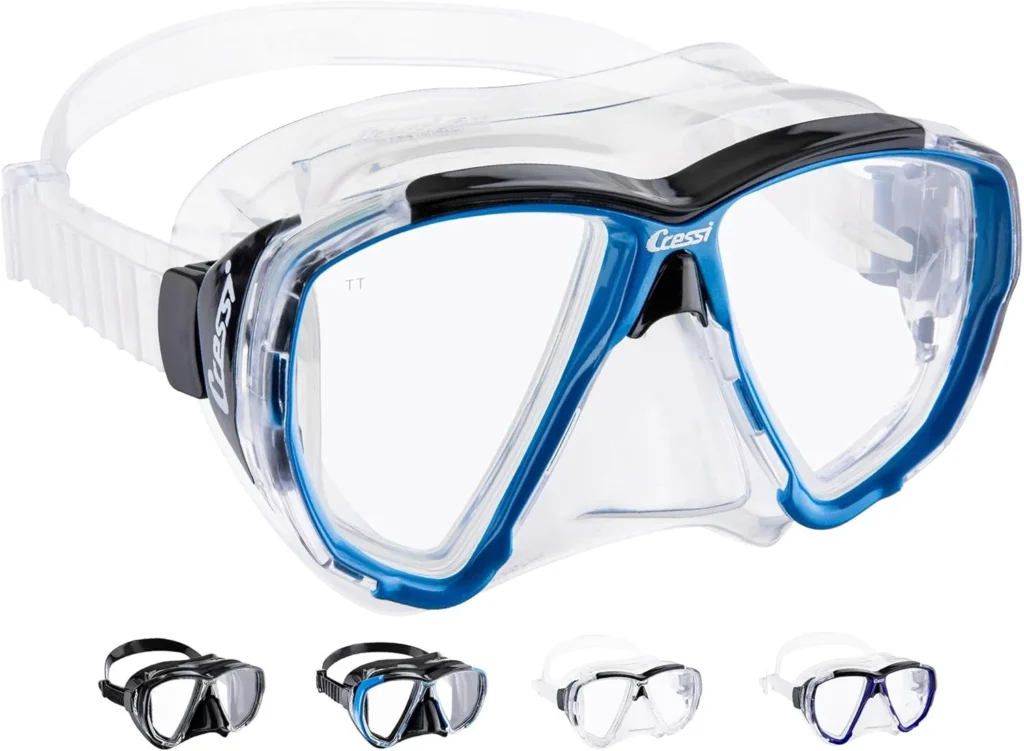
Example mask geometry only. A product photo cannot confirm fit for your face.
Start with fit, not size
Small, medium and large vary by manufacturer. Treat the label as a shortlist filter, not a universal measurement.
The skirt creates the seal
The soft skirt must contact smooth skin evenly without gaps, folding, pinching or hair under its edge.
The strap only stabilizes
A tighter strap cannot rescue the wrong geometry and may distort the skirt enough to create new leaks.
There is no universal snorkel mask size chart
One brand’s small can overlap another brand’s medium. Some masks are sold as one adult size even though their skirt shape favors a narrower or broader face. Gender and age labels are also imperfect because they describe a target market, not the shape of an individual face.
Measure only to compare your face with the exact manufacturer chart for the exact model. Do not convert a facial measurement into a site-wide size. If a listing does not publish a method, prioritize a seller with a practical return policy and test the mask indoors before removing protective materials.
The 3-minute snorkel mask fit test
PADI and Divers Alert Network both emphasize a gentle seal check without relying on the strap. Work through these steps in order.
1. Clear the sealing surface
Move hair away from the forehead and temples. Keep the strap forward and inspect the skirt for twists, folds or packaging distortion.
3. Inhale gently through your nose
Release your hands after a light nasal inhale. A promising fit stays in place without continuous suction. Strong suction can make a poor shape seem acceptable.
5. Add the strap lightly
Position it high on the back of the head and above the ears. Tighten only enough to stabilize the mask. Check for pressure at the brow, bridge, cheekbones and upper lip.
2. Place, do not press
Center the nose pocket and let the skirt rest evenly on clean, dry skin. Do not flatten it hard against your face.
4. Repeat with a mouthpiece
Put the snorkel mouthpiece in, or mimic it by gently rounding your lips. Jaw and cheek movement can change the seal. Look left, right, up and down.
6. Check access and comfort
You should be able to pinch your nose if the mask will be used for diving, see without painful blind spots and wear it without sharp or growing pressure.
PASS: keep it on the shortlist
The mask seals with a gentle inhale, stays comfortable with the mouthpiece, gives usable nose access and needs only light strap tension.
FAIL: try a different shape
Air enters at one area, the frame presses painfully, the nose pocket pinches, the skirt crosses hair, or tightening is required to hold a seal.
How to measure your face without inventing a size
Use a soft tape or a ruler and mirror. Record the numbers in millimeters because many brand charts use metric measurements. Keep the tape straight and do not compress soft tissue.
Face height
Measure from the point between the eyebrows to the center just below the lower lip only when a manufacturer requests this dimension. This is common for full-face masks, not every traditional mask.
Nose bridge and pocket depth
Note whether the bridge is narrow, broad, high or low and whether the tip or underside of your nose touches the pocket. There is rarely a useful universal number for pocket depth.
Cheekbone width
Measure the widest straight-line distance across the cheekbones. Use it only if the exact brand provides a comparable frame or face-width range.
Seal contour
Notice where your face becomes flatter or more angular around the temples, cheeks and upper lip. This shape often predicts fit better than total width alone.
What the leak location can tell you
Leaks at the temples
The skirt may be too wide, too flat or sitting on hair. Try a narrower or more flexible skirt before adding strap tension.
Leaks below the nose
The lower skirt may be too long, the nose pocket may be pulling upward, or facial hair may cross the seal.
Pressure at the brow or bridge
The frame may be too shallow, the bridge too narrow or the mask positioned too high. Persistent pressure is a fit failure even if the mask seals.
Leaks only with the mouthpiece
Jaw movement may lift the lower skirt. Repeat every fitting with the snorkel attached or a similar mouth position.
Sizing a snorkel mask for a child
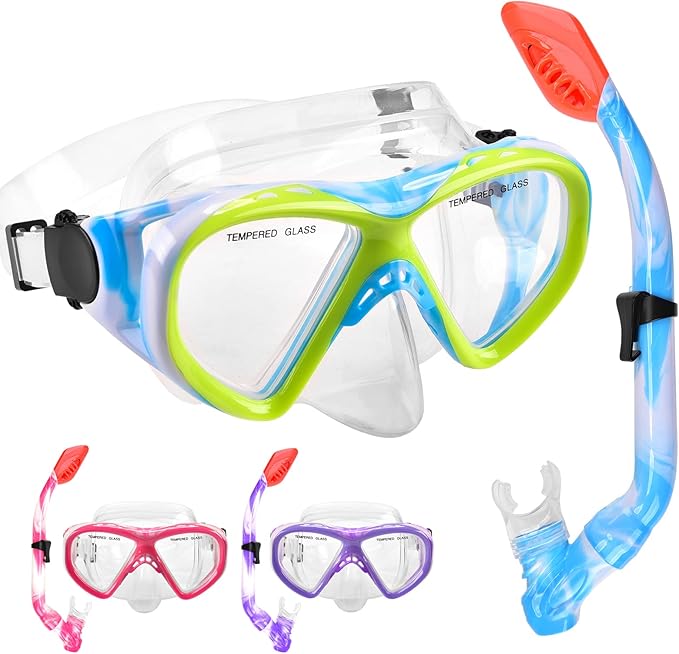
Do not solve an oversized adult mask by overtightening it. A child-size skirt should sit on smooth skin, remain comfortable and pass the same gentle seal test. The nose pocket must not press painfully, and the child should be able to remove the mask without panic.
Age ranges are only a starting point. Confirm the exact model’s guidance, test the complete set before travel and supervise children directly in and around water. A well-fitting mask is not a flotation device and does not replace swimming ability or attentive adult supervision.
Prescription, facial hair and full-face sizing
Prescription masks
Choose a frame that seals first, then confirm the exact optical-lens system and available left/right powers. Lens compatibility cannot compensate for a poor skirt fit.
Mustaches and beards
Hair crossing the skirt can create leak paths. Look for a skirt shape that seals above the mustache line, keep hair out of the edge and expect that some faces need small adjustments.
Full-face masks
Use only the exact maker’s face-height method and size chart. Traditional-mask seal advice is not a substitute. Follow all manufacturer limits and use the product only for its intended activity.
Five sizing mistakes that cause avoidable leaks
1. Buying from an adult, women’s, men’s or youth label without checking the exact face geometry.
2. Pulling the strap tight during the first seal test.
3. Testing without the snorkel mouthpiece or normal facial movement.
4. Accepting pressure because the mask does not immediately leak.
5. Removing packaging or missing the return window before completing a clean indoor fit check.
A safer way to buy a mask online
Shortlist two or three shapes, compare your measurements only with each maker’s instructions, confirm the return conditions, and perform the complete dry test as soon as the mask arrives. Keep the model that seals comfortably with the least strap tension, not the one with the most impressive feature list.
Snorkel mask sizing FAQs
Sources and editorial basis
This guide follows current fitting principles from PADI’s mask guidance and Divers Alert Network. Manufacturer size charts should be checked for the exact model because dimensions and measurement methods vary.

One Comment