Best Snorkel Mask Defogger: 4 Carefully Matched Options for 2026
Solve the Whole Mask Setup
Defog treatment works best when the mask fits correctly and the lens is prepared according to its manufacturer.
Quick answer: The best mask defogger for most snorkelers is Stream2Sea Professional Mask Defog because its current ingredients, directions and environmental claims are unusually transparent. Cressi is the simple alcohol-free spray, JAWS Quick Spit is the convenience choice, and GEAR AID Sea Gold is the concentrated gel for compatible dive-mask lenses.
SnorkelStory analyzes manufacturer directions, lens exclusions, ingredient or testing disclosures and recurring owner-feedback patterns. Performance depends on a clean lens, water temperature, application amount and mask fit. Reviews reveal repeatable usability questions but cannot guarantee clarity on another lens.
Lens and eye safety: Use only a product the mask and defogger manufacturers allow for the exact lens. Keep it out of the eyes, rinse exactly as directed and stop for burning, persistent blur or irritation. Never use toothpaste, flame or abrasive preparation on plastic, coated or prescription lenses unless the mask maker explicitly permits it.
Affiliate disclosure: As an Amazon Associate, SnorkelStory may earn from qualifying purchases at no extra cost to you. Commercial relationships do not decide ranking.
Best Mask Defogger Picks at a Glance
BEST OVERALL
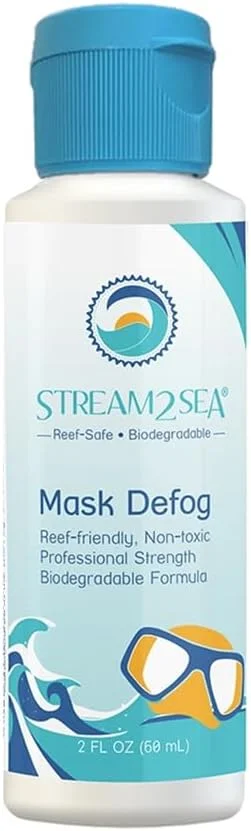
Stream2Sea Professional
Clear directions and qualified environmental positioning.
BEST CONVENIENCE
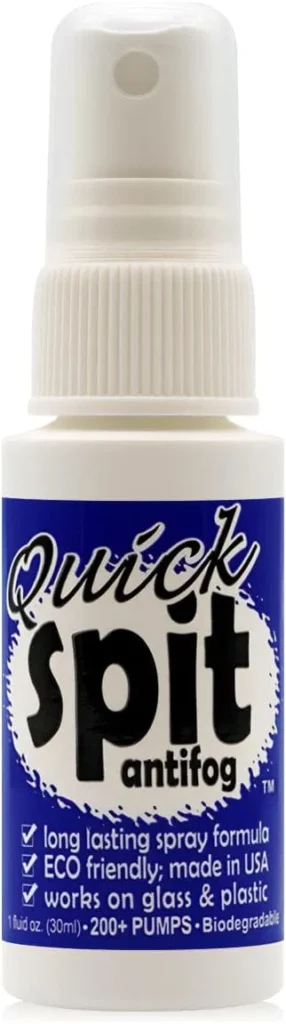
JAWS Quick Spit
Fast pump format for compatible lenses.
BEST SIMPLE SPRAY
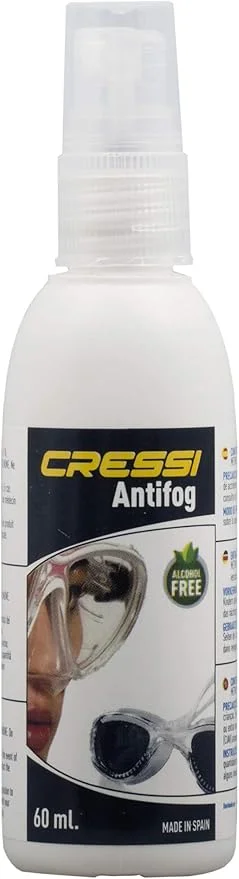
Cressi Anti-Fog
Alcohol-free brand-led option.
BEST CONCENTRATED GEL
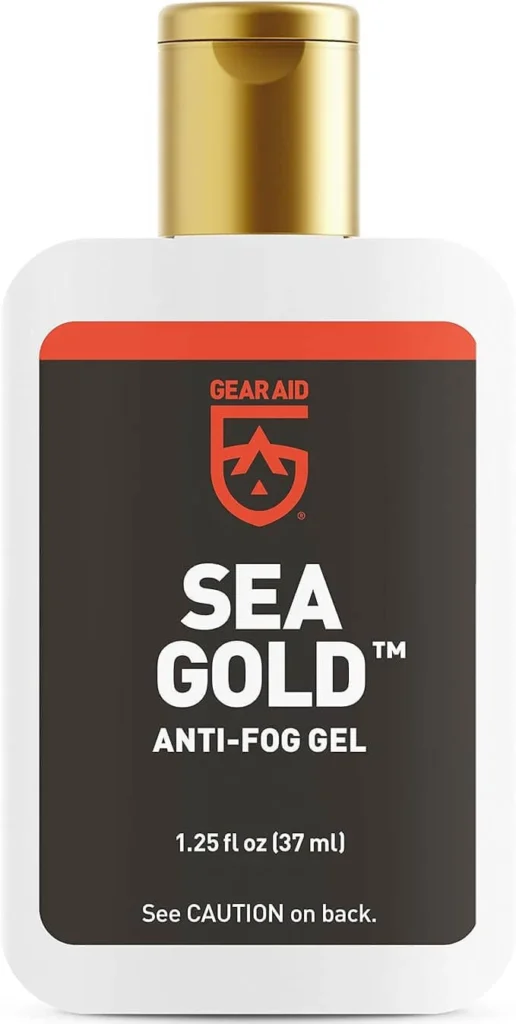
GEAR AID Sea Gold
Longer-lasting mask gel with explicit exclusions.
How We Chose the Best Mask Defogger
We prioritize exact lens compatibility, current directions, qualified environmental claims and product identity. A formula loses points when it relies on undefined reef-safe marketing, omits eye cautions or encourages one routine for every lens. We also separate mask defog from factory-residue removal because they solve different problems.
Owner feedback is screened for lens type, water temperature, application method and duration. Comments without that context are weak evidence. The best mask defogger must be easy to dose and rinse without creating a smeared film that reduces vision.
Our 4 Snorkel and Dive Mask Defoggers
1. Stream2Sea Professional Mask Defog: Best Overall
Why it stands out: Stream2Sea publishes a short ingredient list, application directions and aquatic-impact positioning more clearly than most alternatives. The 2-ounce formula uses deionized water, aloe vera leaf extract and sodium lauroyl methyl isethionate.
Best for: Snorkelers who want an easy liquid treatment with unusually transparent current documentation.
Watch for: Reef-Safer is the brand’s qualified term, not a universal regulatory certification. Avoid eye contact, use only the small amount directed and rinse streaks before wearing the mask.
2. Cressi Anti-Fog Spray: Best Simple Alcohol-Free Spray
Why it stands out: Cressi documents a straightforward 60 ml, zero-alcohol spray for masks and goggles. It is applied to the inside of the lens before wetting, which suits travelers who want a familiar dive-brand product without a concentrated gel.
Best for: General snorkeling and dive-mask users who prefer a spray bottle and current brand documentation.
Watch for: Do not assume alcohol-free means compatible with every factory coating or prescription insert. Follow both the product label and the mask maker’s care instructions.
3. JAWS Quick Spit Anti-Fog Spray: Best Multi-Lens Convenience
Why it stands out: Quick Spit is an established pump-spray format from a specialist anti-fog brand and is convenient when a household uses several compatible types of eyewear. The current product identity can be verified on the JAWS site.
Best for: Travelers who want quick spray application across compatible masks or goggles after checking each lens.
Watch for: Package size and lens claims vary across bundles. Read the exact label, keep spray away from eyes and never assume compatibility with anti-reflective or specialty coatings.
4. GEAR AID Sea Gold Anti-Fog Gel: Best Concentrated Gel for Glass Masks
Why it stands out: Sea Gold is a concentrated 1.25-ounce rub-on gel for glass and plastic dive masks. GEAR AID publishes detailed apply, spread and rinse steps plus ReefTox coral-testing information.
Best for: Long sessions, cooler water and users of compatible dive or snorkel mask lenses who prefer a concentrated treatment.
Watch for: GEAR AID explicitly excludes swim goggles and dry lenses such as eyeglasses. The current product page also cautions about some coated lenses, so follow the exact compatibility guidance.
Interactive comparison
Compare Snorkel Mask Defoggers Side by Side
Select two or three options. Compare the format, intended user and the limitation to check before ordering.
| Feature |  Stream2Sea Professional Mask Defog Stream2Sea Professional Mask Defog |  Cressi Anti-Fog Spray Cressi Anti-Fog Spray |  JAWS Quick Spit Anti-Fog Spray JAWS Quick Spit Anti-Fog Spray |  GEAR AID Sea Gold Anti-Fog Gel GEAR AID Sea Gold Anti-Fog Gel |
|---|---|---|---|---|
| Best for | Best overall | Best simple alcohol-free spray | Best multi-lens convenience | Best concentrated gel for glass masks |
| Formula format | Concentrated liquid | Pump spray | Pump spray | Concentrated gel |
| Lens direction | Follow mask and product compatibility directions | Confirm coatings and prescription-insert compatibility | Exact bundle and coating claims vary | Glass masks; maker excludes swim goggles and dry lenses |
| Application | Small amount, spread, rinse as directed | Apply and rinse under current label directions | Use the label amount and rinse before wearing | Very small amount, spread and rinse as directed |
| Good match for | Travelers wanting a documented reef-conscious formula | Simple routine for compatible masks | Households treating compatible masks and goggles | Traditional compatible glass-lens masks |
| Main watchout | Reef-Safer is a qualified brand term, not universal certification. | Alcohol-free does not mean compatible with every coating. | Never assume specialty-coating compatibility; keep spray from eyes. | Follow current coated-lens exclusions and compatibility guidance. |
| Current listing | Check on Amazon | Check on Amazon | Check on Amazon | Check on Amazon |
Check both the defogger label and the mask maker’s care instructions. Avoid eye contact, rinse as directed and never use an incompatible abrasive treatment on coated or plastic lenses.
Why Snorkel Masks Fog
Warm humid air inside a mask meets a cooler lens and water vapor condenses into tiny droplets. Those droplets scatter light. A defogger leaves a thin film that encourages water to sheet across the lens instead of forming many separate beads. It does not change a poor face seal, damaged skirt or breathing technique.
New silicone masks can release manufacturing residue onto the lens, while old masks accumulate sunscreen, skin oils and cleaner residue. Anti-fog applied over contamination may fail quickly. Clean only with the method approved for the exact glass, plastic, film or prescription lens. The best mask defogger works on a properly prepared compatible surface.
How to Apply Mask Defog Correctly
More product can create blur, streaks and eye exposure. An aggressive rinse can remove the useful film. Practice in a sink or pool before a trip and adjust only within the label. The best mask defogger routine is repeatable, not improvised on a moving boat.
How to Prepare a New Mask Without Damage
Some tempered-glass dive masks arrive with silicone-related residue that interferes with defog. The safe preparation method is model-specific. A compatible commercial pre-cleaner may be allowed, while plastic lenses, anti-reflective coatings and full-face panels may be permanently damaged by abrasives or heat.
Do not copy a lighter, flame or toothpaste trick from a generic video. Fire can damage the skirt, frame, adhesive and lens treatment, while abrasive paste can scratch plastic. Ask the manufacturer when the manual is unclear. No amount of anti-fog can restore a burned or abraded surface.
Gel vs Spray vs Drops
Concentrated gel tends to stay on a compatible dive-mask lens and can suit cold water or repeated sessions, but careful dosing is essential. A spray distributes quickly and can work across more types of eyewear when its label permits. Drops split the difference and may combine cleaning with anti-fog.
Choose by lens and directions, not strength. Sea Gold is explicitly not for swim goggles or dry eyeglasses. Cressi and Stream2Sea publish broader mask or goggle uses, while specialty coatings still require the lens maker’s approval. The best mask defogger is the correct formula for the surface in front of the eye.
Should You Use Spit or Baby Shampoo?
Spit is inconsistent and adds biological material to a shared or rental mask. Baby shampoo is not automatically tested for aquatic impact or lens compatibility, and a home dilution has no standardized concentration. Both may appear to work because surfactants change water behavior, but convenience does not create reliable directions.
A labeled product gives the user a defined dose, exclusions and first-aid response. That is more useful for a comparison and easier to repeat. At protected reefs, follow local rules and use the least product required. Reef safe is not a universally regulated performance standard, so prefer specific testing and qualified language.
Can You Use Defogger on a Full-Face Snorkel Mask?
Only when the full-face mask manufacturer permits the exact formula and lens material. Large polycarbonate panels and factory coatings can react differently from tempered glass. Keep treatment out of breathing valves, seals and airflow channels.
Abnormal fogging in a full-face mask can also indicate an inner-seal, fit or airflow problem. Do not keep adding product and continue. Leave the water, inspect the mask and follow its manual. The best mask defogger cannot correct a breathing-system fault.
U.S. Water and Climate Factors
Warm humid Florida and Hawaii air can load a mask with moisture before entry, while cold California or spring water creates a stronger temperature difference across the lens. Apply treatment in shade with clean hands and keep sunscreen away from the interior. Windblown sand can turn rubbing into abrasion.
Rinse stations may prohibit soaps or chemicals. Use only the amount and location allowed by the operator, park or sanctuary. A bottle that travels in carry-on luggage must meet current security rules and remain sealed against leaks.
Troubleshooting Persistent Fog
Mask and Bottle Care
Evidence and Update Standard
Product facts come from current pages for Stream2Sea, the Cressi catalog, JAWS Quick Spit and GEAR AID Sea Gold. We recheck formulation, directions, exclusions, image and retailer identity before publication.
Frequently Asked Questions
Bottom Line
The best mask defogger is Stream2Sea for transparent all-around use, Cressi for a simple alcohol-free spray, JAWS for convenience and Sea Gold for compatible glass or plastic dive masks needing a concentrated gel.
Next step: Check your lens material and coating, compare two compatible formulas, read both labels and practice the exact dose and rinse routine before the trip.