
Best Dive Computers for 2026: 8 Picks by Diver and Display
Build the Rest of Your Dive System
A dive computer supports planning and monitoring; the BCD, light and surface-snorkeling gear still need to suit the trip.
Quick answer: The Shearwater Peregrine is our best dive computer for most recreational divers because its large screen and clear interface make critical information easy to read. Choose the Cressi Leonardo 2.0 for simple beginner use, Suunto Zoop Novo for budget value, Garmin Descent G2 for a compact smartwatch, or Shearwater Perdix 2 only when advanced modes and field-replaceable power solve a real need.
SnorkelStory evaluates manufacturer specifications, current manuals and recurring owner-feedback patterns. We do not claim hands-on testing. We separate verified facts from editorial judgment, identify the user each model suits and name the limitation that could disqualify it.
Affiliate disclosure: As an Amazon Associate, SnorkelStory may earn from qualifying purchases at no extra cost to you. Commercial relationships do not determine rankings. Prices and listing configurations change, so every purchase link opens the current listing.
Best Dive Computer Picks at a Glance
The best dive computer is the one you can read, understand and operate before the dive. Select by training, display, power plan and actual gas configuration, not by the longest feature list.
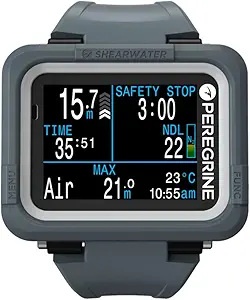
BEST OVERALL RECREATIONAL COMPUTER
Shearwater Peregrine
Recreational divers who want a readable wrist unit with room to grow.
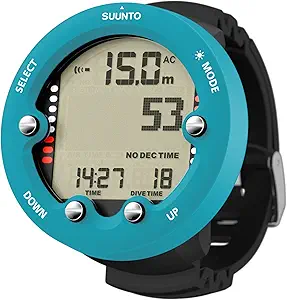
BEST BUDGET CONSOLE-STYLE WRIST PICK
Suunto Zoop Novo
Budget-minded recreational divers, training and rental-heavy trips.
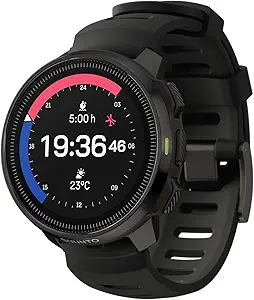
BEST DIVE AND OUTDOOR HYBRID
Suunto Ocean
Divers who split time among scuba, freediving, hiking and endurance sports.
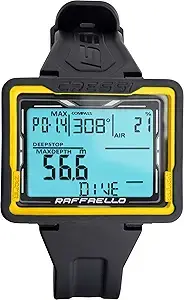
BEST READABLE USER-BATTERY ALTERNATIVE
Cressi Raffaello
Recreational divers who prioritize large data fields, compass and battery independence.
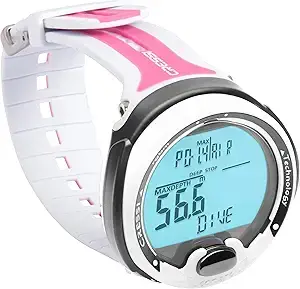
BEST SIMPLE BEGINNER PICK
Cressi Leonardo 2.0
Newly certified divers who want straightforward core information rather than smartwatch functions.
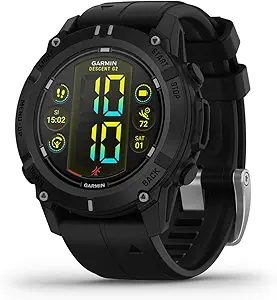
BEST COMPACT DIVE SMARTWATCH
Garmin Descent G2
Travelers and active recreational divers who value a smaller all-day watch.
BEST WATCH FOR ADVANCED DIVERS
Shearwater Teric
Experienced divers who genuinely need advanced modes in a wearable form.
BEST TECHNICAL AND EXPEDITION PICK
Shearwater Perdix 2
Technical divers and frequent travelers who need advanced modes and easy battery sourcing.
How We Chose the Best Dive Computer
We began with the search needs shown in SnorkelStory’s U.S. Search Console data: beginner models, wrist displays, dive computer reviews, comparison help and recreational use. We then checked current manufacturer pages for modes, algorithm, screen, depth rating, battery, compass and transmitter support. A feature is included only when the exact current model supports it.
Owner reports help us spot repeat questions about readability, menu friction, charging, buttons, syncing and service. They cannot prove failure rates or decompression safety. Different settings, algorithms and dive histories explain many apparently conflicting comparisons.
The 8 Best Dive Computers for 2026
Each recommendation below has a defined role. Do not buy a technical model as a substitute for training, and do not assume a familiar smartwatch interface makes decompression guidance intuitive.
1. Shearwater Peregrine: Best Overall Recreational Computer
Why it stands out: Its large color screen, clear menu system and recreational through advanced Nitrox capability make it the strongest starting point for divers who value legibility. Shoppers seeking the newer Peregrine TX must verify that the live listing specifically names TX because features differ.
Best for: Recreational divers who want a readable wrist unit with room to grow.
Watch for: The original Peregrine does not have every TX feature. Confirm exact model identity, compass and air-integration support before ordering.
2. Cressi Leonardo 2.0: Best Simple Beginner Pick
Why it stands out: A one-button interface and large edge-to-edge display reduce menu clutter for a new recreational diver. Cressi supports Air, Nitrox and Gauge modes with a user-changeable battery and optional Bluetooth accessory.
Best for: Newly certified divers who want straightforward core information rather than smartwatch functions.
Watch for: One-button navigation is easy to learn but slower when changing several settings. It is a one-gas recreational design, not a technical-computer substitute.
3. Suunto Zoop Novo: Best Budget Console-Style Wrist Pick
Why it stands out: The Zoop Novo keeps a large matrix display and five core modes in a proven, no-lifestyle-frills format. Its user-changeable CR2450 battery suits travelers who do not want to depend on a charger.
Best for: Budget-minded recreational divers, training and rental-heavy trips.
Watch for: The USB cable is sold separately, the case is bulky for daily wear and its Suunto RGBM behavior may not match a buddy using another algorithm.
4. Garmin Descent G2: Best Compact Dive Smartwatch
Why it stands out: The G2 combines multiple dive modes, a bright AMOLED screen and Garmin sport tracking in a compact watch. It is the better fit when one device must cover diving, workouts and daily wear.
Best for: Travelers and active recreational divers who value a smaller all-day watch.
Watch for: It does not provide wireless tank-pressure integration. Confirm that its smaller screen works with your eyesight, gloves and task loading.
5. Suunto Ocean: Best Dive and Outdoor Hybrid
Why it stands out: Suunto combines single-gas, multigas and freedive modes with offline maps, outdoor sports and optional Tank POD integration. Its underwater route feature is distinctive for divers who also want a full adventure watch.
Best for: Divers who split time among scuba, freediving, hiking and endurance sports.
Watch for: The premium price and feature density are wasted if you only need depth, time and no-decompression status. Verify Tank POD compatibility and bundle contents.
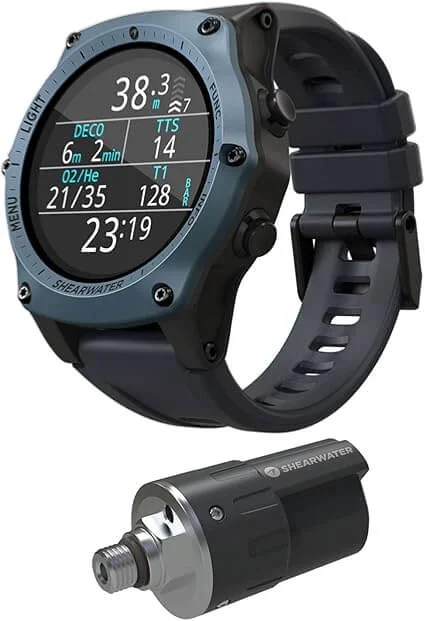
6. Shearwater Teric: Best Watch for Advanced Divers
Why it stands out: The Teric puts open-circuit technical, closed-circuit bailout, freedive and optional four-transmitter air integration into a watch format with an AMOLED display.
Best for: Experienced divers who genuinely need advanced modes in a wearable form.
Watch for: Complex capability increases setup responsibility. A recreational diver may get clearer value from the Peregrine family.
7. Cressi Raffaello: Best Readable User-Battery Alternative
Why it stands out: A wide rectangular display, compass, three Nitrox mixes and user-replaceable battery make the Raffaello a practical middle ground between entry models and premium color computers.
Best for: Recreational divers who prioritize large data fields, compass and battery independence.
Watch for: Optional Bluetooth adds cost, and marketplace names can lag manufacturer revisions. Verify the current configuration.
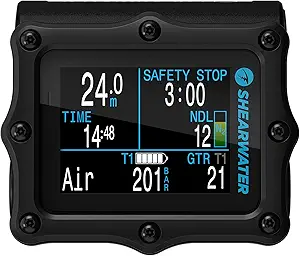
8. Shearwater Perdix 2: Best Technical and Expedition Pick
Why it stands out: The Perdix 2 combines a large color screen, open-circuit technical and CCR bailout modes, optional multi-transmitter integration and a user-changeable AA battery. That field-serviceable power system is compelling for remote trips.
Best for: Technical divers and frequent travelers who need advanced modes and easy battery sourcing.
Watch for: It is expensive, large and unnecessary for most new recreational divers. Use technical modes only within training and team procedures.
Interactive comparison
Compare Dive Computers Side by Side
Select two or three options. Compare the format, intended user and the limitation to check before ordering.
| Feature |  Shearwater Peregrine Shearwater Peregrine |  Cressi Leonardo 2.0 Cressi Leonardo 2.0 |  Suunto Zoop Novo Suunto Zoop Novo |  Garmin Descent G2 Garmin Descent G2 |  Suunto Ocean Suunto Ocean |  Shearwater Teric Shearwater Teric |  Cressi Raffaello Cressi Raffaello |  Shearwater Perdix 2 Shearwater Perdix 2 |
|---|---|---|---|---|---|---|---|---|
| Best for | Best overall recreational computer | Best simple beginner pick | Best budget large-screen pick | Best compact dive smartwatch | Best dive and outdoor hybrid | Best advanced dive watch | Best readable user-battery alternative | Best technical and expedition pick |
| Display | 2.2-inch color LCD family | Large edge-to-edge display | Large matrix display | 1.2-inch AMOLED, 390×390 | Color outdoor-watch display | 1.39-inch AMOLED, 400×400 | Wide rectangular backlit display | 2.2-inch color LCD |
| Power | Rechargeable | User-changeable battery | User-changeable CR2450 | Rechargeable; up to 27 dive hours | Rechargeable; up to 60 dive hours without Pod | Rechargeable; about 30 dive hours | User-replaceable battery | User-changeable AA |
| Modes | Recreational through advanced Nitrox; verify exact model | Air, Nitrox, Gauge; one gas | Air, Nitrox, Gauge, Free, Off | Multiple scuba, apnea and gauge modes | Single gas, multigas and freedive | Recreational, technical, CCR bailout, freedive | Air, Nitrox, Gauge, Free; three mixes | Recreational, technical, CCR bailout, Gauge |
| Good match for | Divers prioritizing readability | New recreational divers | Budget and training use | Travel and multisport use | Scuba plus outdoor sports | Advanced divers wanting watch format | Large fields and compass | Technical and remote-trip use |
| Main watchout | Confirm original Peregrine versus newer TX features. | One-button navigation is slower for many changes. | USB cable is separate; case is bulky. | No wireless tank-pressure integration. | Premium and complex for basic diving. | Cost and complexity exceed beginner needs. | Bluetooth is optional; verify current version. | Large, expensive and unnecessary for most beginners. |
| Current listing | Check on Amazon | Check on Amazon | Check on Amazon | Check on Amazon | Check on Amazon | Check on Amazon | Check on Amazon | Check on Amazon |
Verify the exact model, manual, algorithm settings, included accessories, seller and warranty. No computer removes decompression sickness risk.
What a Dive Computer Does and Does Not Do
A computer tracks depth and time, applies a mathematical decompression model and shows remaining no-decompression time, ascent information and required stops. Depending on the model it may also track gas, compass heading, tank pressure, heart rate or surface activities. It estimates exposure from the information it has; it does not measure whether decompression sickness is developing.
Divers Alert Network advises using a computer throughout every dive in a series. A unit cannot reconstruct unrecorded exposure after being left on shore or swapped between divers. Follow its warnings, remain within training and use conservative profiles and safety stops. No model makes an aggressive profile risk-free.
A Practical Best Dive Computer Decision Test
First remove any model whose smallest critical field is hard to read through your mask. Next remove units that cannot support your trained gas plan or whose battery strategy does not fit the trip. Then compare button operation with gloves, alarm clarity, service access and the exact features included in the listing. This process usually leaves a shorter and more defensible best dive computer list than comparing headline specifications.
For a new diver, the best dive computer should make depth, no-decompression time, ascent rate and stop information immediately recognizable. Compass, air integration and phone syncing are secondary. For an experienced traveler, charger redundancy and authorized service at the destination may matter more. For a technical diver, team algorithm choices, gas switching, backup instruments and written procedures take priority.
A dive computer comparison also needs a rejection test. Reject a watch that is too small for your corrected vision, a large computer that catches on your exposure setup, a rechargeable model you cannot reliably power, or a transmitter system you have not trained to monitor. The best dive computer is not the most expensive one; it is the model whose essential information remains usable when visibility, cold and workload become worse than expected.
Best Dive Computer Algorithms and Conservatism
Bühlmann ZHL-16C with gradient factors, proprietary RGBM implementations and other models can produce different remaining times and stop schedules. Even two identical units can disagree when personal settings, gas, altitude or prior dives differ. Before a buddy trip, compare algorithm settings and decide how the team will follow the more limiting plan.
A lockout or longer stop is not evidence that a computer is defective. Read the manual to understand ascent violations, missed stops and repetitive-dive rules. If you want adjustable gradient factors, confirm exactly what can be changed and whether your training supports those choices.
Choose the Best Dive Computer by Diver Type
New Recreational Diver
Prioritize a legible screen, simple alarms, Air and Nitrox, an understandable battery plan and a manual you will actually practice. Leonardo 2.0 and Zoop Novo fit this brief.
Cold-Water Diver
Large buttons, a bright uncluttered display and operation with thick gloves matter. Check low-temperature battery guidance and rehearse every screen in the exact gloves used.
Advanced or Technical Diver
Multiple gases, CCR bailout, transmitter capacity and customizable decompression settings matter only alongside appropriate training, written plans and backup instruments.
Frequent Traveler
Balance charger dependence, log sync, baggage space and service access. A G2 is compact; a Peregrine is easier to read; an AA-powered Perdix 2 is easier to support remotely.
Multisport User
A Garmin Descent G2 or Suunto Ocean can replace an activity watch, but fitness features should not obscure dive-mode setup, alarms or battery planning.
Freediver and Scuba Diver
Confirm whether apnea and scuba histories are handled as you expect. Repetitive breath-hold activity and scuba on the same day requires conservative planning and current agency guidance.
Screen, Buttons and Underwater Readability
Color does not automatically mean clearer. Look for large primary depth and time fields, high contrast, understandable stop information and alarms you can distinguish without reading tiny labels. Presbyopia, mask lenses, visibility and task loading all change the effective screen size.
Practice starting, changing gas, acknowledging alarms, reading ascent rate and finding the compass on land. Then repeat in confined water. If a multi-button shortcut cannot be recalled under stress, the interface is not yet ready for open water.
Rechargeable vs. User-Changeable Batteries
Rechargeable
Convenient for routine use and supports bright displays. Pack the correct cable, inspect charging contacts and start a trip with reserve capacity. Runtime claims vary by brightness and features.
User-Changeable
CR2450 or AA power can be easier to source during travel. Use the exact approved battery, inspect the seal and follow the manual. A casual battery change can compromise water resistance.
Air Integration, Transmitters and Backup Pressure
Air integration can show tank pressure, gas time and consumption data. It does not eliminate the need to know the starting pressure, monitor gas independently and follow the manufacturer’s transmitter pairing and battery procedures. Not every watch with wireless connectivity supports a tank transmitter; the Garmin Descent G2 does not.
Many divers retain an analog submersible pressure gauge as an independent pressure source. Decide the backup configuration with an instructor or service professional. A transmitter must be installed on a suitable first-stage port, protected during handling and checked during the pre-dive sequence.
What If Your Dive Computer Fails?
DAN’s failure guidance is clear that a backup must accompany every dive in the series. A fresh computer cannot safely recreate missing tissue-loading history. When only a depth or pressure display fails, aborting remains the prudent response.
U.S. Diving Conditions That Change the Choice
Florida and Hawaii often mean warm-water repetitive boat days, so battery endurance, clear surface-interval data and easy Nitrox switching can matter. Southern California commonly adds colder water, gloves and lower visibility, increasing the value of large buttons and high-contrast information. High-altitude lakes require correct altitude behavior and specific training.
These are regional planning factors, not forecasts. Confirm water, weather, operator and site conditions on the day. For air travel, carry the computer and charging accessories where practical, protect transmitters and check the airline’s current lithium-battery rules.
Care, Updates and Pre-Trip Check
Evidence and Update Standard
Specifications are drawn from current pages for Shearwater Peregrine TX, Teric, Perdix 2, Garmin Descent G2, Suunto Ocean, Zoop Novo, Cressi Leonardo and Raffaello. Safety interpretation follows DAN computer guidance. We review model identity, specifications and links when manufacturers revise them.
Frequently Asked Questions
Bottom Line
The best dive computer makes the most important information obvious and fits the diving you are trained to do. Start with the Peregrine for readable recreational use, Leonardo 2.0 for simplicity, Zoop Novo for budget value or G2 for compact multisport use. Pay for Teric or Perdix 2 capability only when your diving requires it.
Next step: Compare two models above, download both manuals and rehearse the primary dive screens before choosing. Verify the exact live listing, warranty and return policy.