Best Snorkeling Fins for 2026: 5 Picks by Fit and Trip
Complete Your Snorkeling Setup
Match your fins with a comfortable mask, practice the core skills, and add flotation when the conditions or swimmer call for it.
Quick answer: The Cressi Agua is our best overall choice for most warm-water recreational snorkelers. The Cressi Light is easier to pack and practice with, the U.S. Divers Trek adds an adjustable compact heel, and the Cressi Clio is the budget full-foot choice. The Mares Avanti Quattro Plus offers more power for boots and mixed scuba use, but it is heavier than most beginners need.
SnorkelStory ranks snorkeling fins by intended use, manufacturer specifications and recurring owner-feedback patterns. We do not claim hands-on testing. Fit, blade stiffness and water conditions can change the result for one person, so we separate verified product facts from editorial judgment and state the main reason to reject each option.
Affiliate disclosure: As an Amazon Associate, SnorkelStory may earn from qualifying purchases at no extra cost to you. Affiliate relationships do not determine the order of the picks. Prices, sellers and configurations can change, so we link to the current product page instead of publishing a fixed price.
Best Snorkeling Fins at a Glance
The best snorkeling fins begin with how you enter the water and what you will wear on your feet. A warm-water resort swimmer needs a different fin from a California snorkeler using boots or a traveler limited to a carry-on.
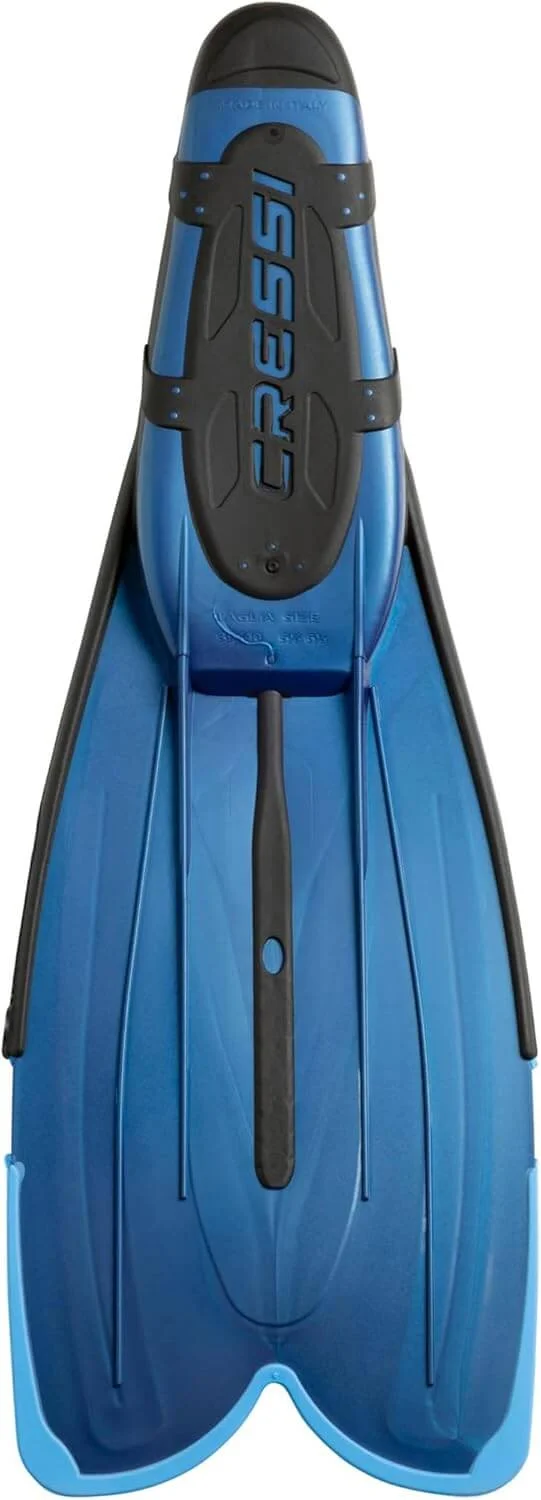
BEST OVERALL FOR RECREATIONAL SNORKELING
Cressi Agua Full Foot Fins
Barefoot use in warm water, resort trips and beginners who want useful thrust without a very stiff blade.
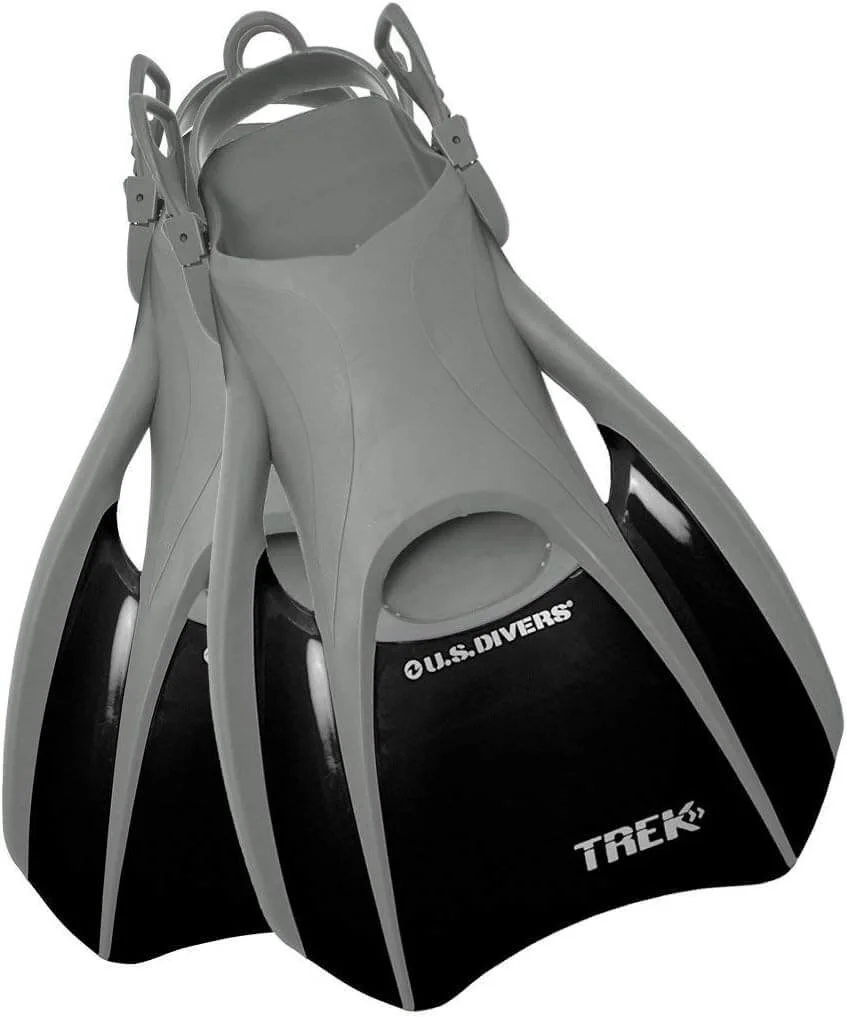
BEST ADJUSTABLE COMPACT OPTION
U.S. Divers Trek Travel Fins
Casual travel, protected water and shoppers who want an adjustable heel in a small package.
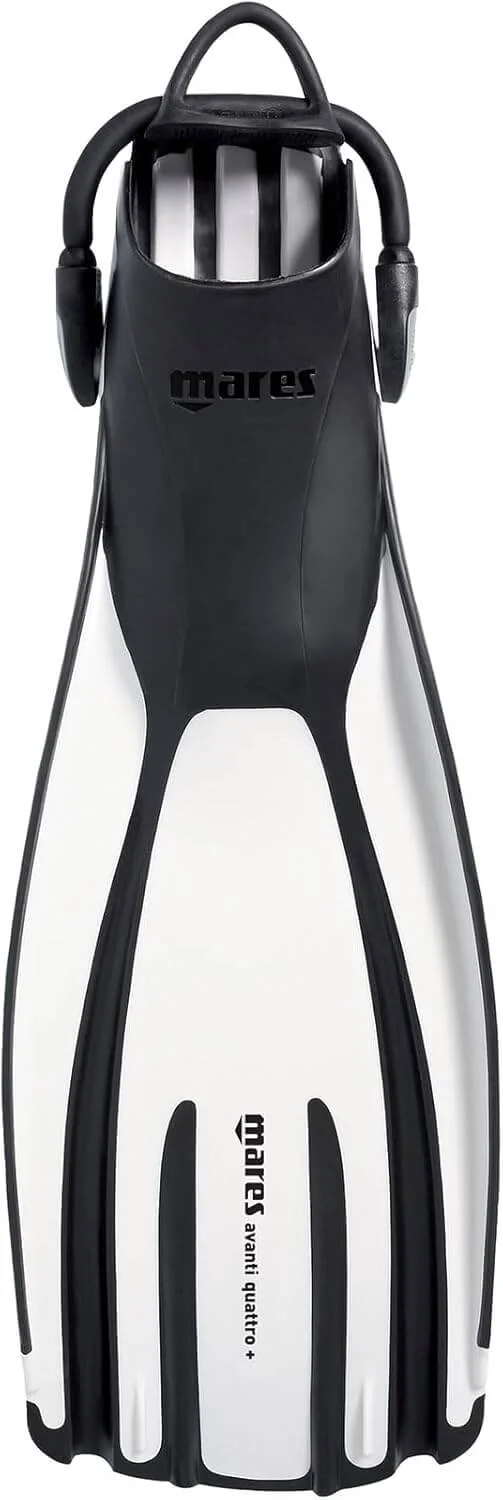
BEST POWERFUL BOOTED OPTION
Mares Avanti Quattro Plus
Strong swimmers, colder-water trips, booted rocky entries and people who also scuba dive.
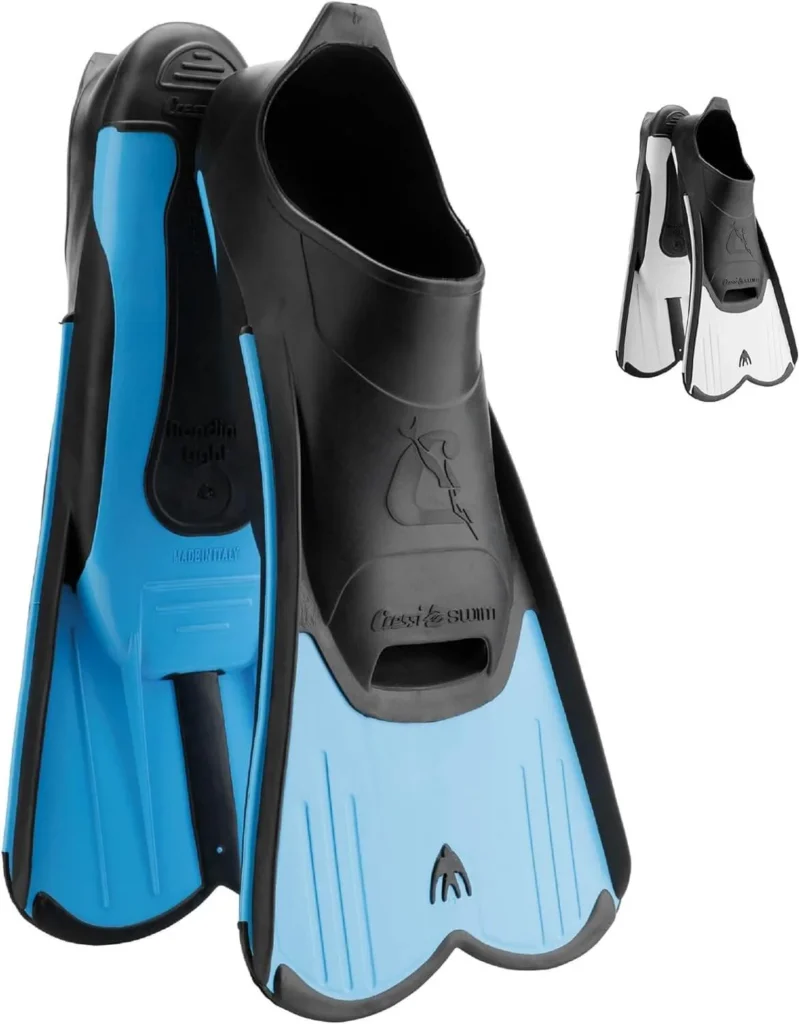
BEST SHORT TRAVEL AND POOL FINS
Cressi Light Short Fins
Carry-on packing, pool practice, easy shore sessions and people who prefer a compact blade.
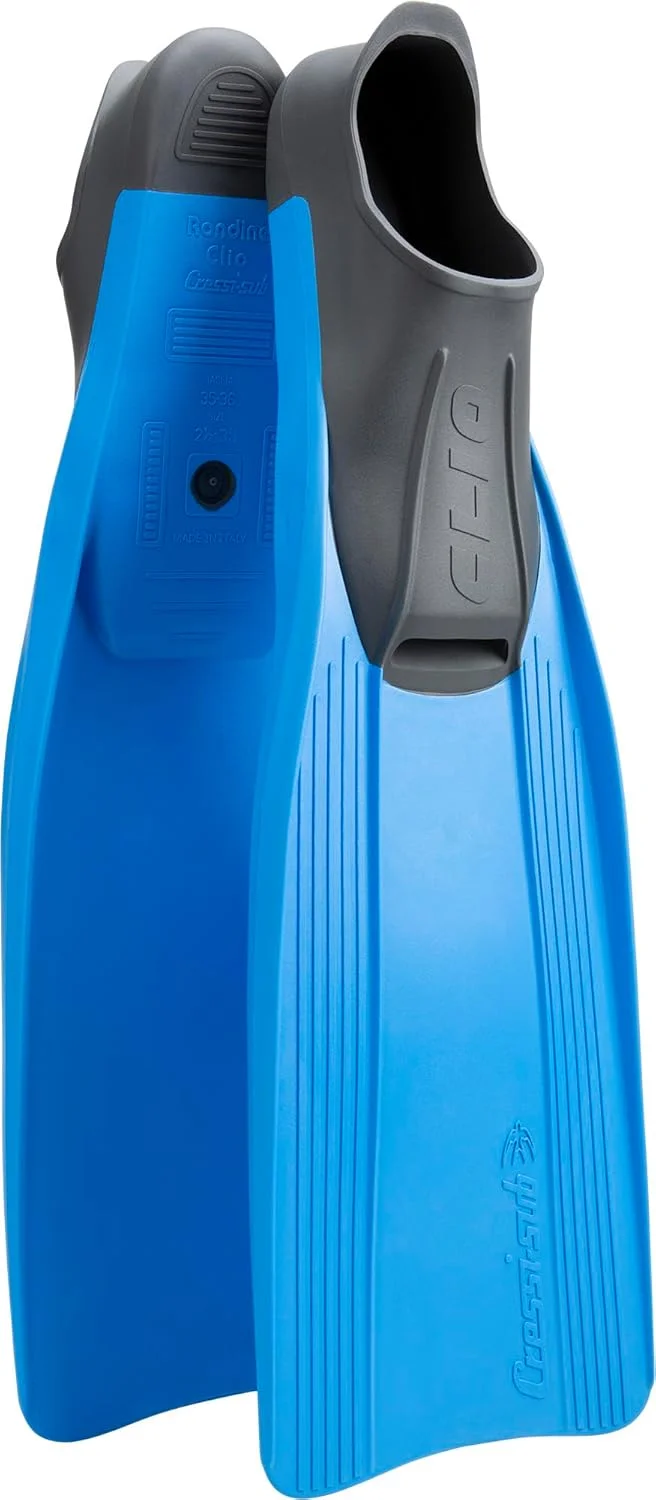
BEST BUDGET FULL-FOOT PICK
Cressi Clio Full Foot Fins
Budget-conscious beginners, families buying multiple sizes and occasional warm-water snorkeling.
How We Chose the Best Snorkeling Fins
To identify the best snorkeling fins, we first classify each model as full-foot, adjustable open-heel or boot-oriented diving equipment. We verify blade and pocket descriptions against current manufacturer pages where available, then compare those facts with repeated owner concerns such as toe pressure, heel slip, blisters, strap security, cramping, packability and propulsion.
Review patterns help identify questions, not guarantees. A fin praised for power can be exhausting on a beginner, while a compact fin criticized for lower thrust may be exactly right in a pool. We do not use a permanent star score or repeat claims that depend on an unknown reviewer’s fitness, technique or water conditions.
The 5 Best Snorkeling Fins for 2026
These picks cover distinct use cases. Three are full-foot Cressi models, one is a compact adjustable travel design, and one is a scuba-first open-heel fin for shoppers who genuinely need boots and more thrust.
1. Cressi Agua Full Foot Fins: Best Overall for Recreational Snorkeling
Why it stands out: The Agua matches the needs of most warm-water vacation snorkelers: a full-foot pocket, a responsive blade and a lighter build than scuba-oriented fins. Cressi describes it as easy to use without special athletic ability, which is the right direction for relaxed surface swimming.
Best for: Barefoot use in warm water, resort trips and beginners who want useful thrust without a very stiff blade.
Watch for: Full-foot comfort is personal. Verify the current size chart, especially if your feet are wide, narrow or between sizes, and test for toe pressure before the return window closes.
2. Cressi Light Short Fins: Best Short Travel and Pool Fins
Why it stands out: The short blade packs more easily and feels manageable in a pool or calm protected water. Cressi positions the Light primarily for swim training while also allowing recreational swimming and snorkeling, so we treat it as the travel and practice pick rather than a current-fighting fin.
Best for: Carry-on packing, pool practice, easy shore sessions and people who prefer a compact blade.
Watch for: A short blade trades some propulsion for control and portability. It is not the right choice for rough water, long distances or a guide who requires stronger open-water equipment.
3. U.S. Divers Trek Travel Fins: Best Adjustable Compact Option
Why it stands out: The Trek gives travelers a compact open-heel alternative when a fixed full-foot pocket is inconvenient. The adjustable strap can accommodate different foot protection and makes the fin easier to share within a narrow size range, provided every user gets a secure heel position.
Best for: Casual travel, protected water and shoppers who want an adjustable heel in a small package.
Watch for: Current retailer configurations can change. Confirm the exact strap, size range and intended footwear. A compact blade offers less reserve power than a longer fin, and loose straps can undermine control.
4. Cressi Clio Full Foot Fins: Best Budget Full-Foot Pick
Why it stands out: The Clio is a straightforward budget fin from an established manufacturer. Cressi describes a responsive blade and a supple elastomer foot pocket, with durable construction suitable for rental departments. That makes it a sensible entry-level option when the fit works.
Best for: Budget-conscious beginners, families buying multiple sizes and occasional warm-water snorkeling.
Watch for: An economical fin still needs an exact fit. Check the EU size conversion and avoid assuming that one listed range will suit every foot width.
5. Mares Avanti Quattro Plus: Best Powerful Booted Option
Why it stands out: The Avanti Quattro Plus is the power option in this list. Mares identifies a four-channel thrust design, anatomical open-heel pocket and bungee strap. It is fundamentally a diving fin, so it belongs here for snorkelers who use boots, enter from boats or need a sturdier setup, not as the default vacation choice.
Best for: Strong swimmers, colder-water trips, booted rocky entries and people who also scuba dive.
Watch for: It is longer, heavier and more demanding than a light recreational fin. Pair it with the correct boots and avoid buying extra stiffness as insurance against conditions that should keep a beginner out of the water.
Interactive comparison
Compare Snorkeling Fins Side by Side
Select two or three options. Compare the format, intended user and the limitation to check before ordering.
| Feature | Cressi Agua | Cressi Light | U.S. Divers Trek | Cressi Clio | Mares Avanti Quattro Plus |
|---|---|---|---|---|---|
| Best for | Best overall recreational fin | Best short travel and pool fin | Best adjustable compact option | Best budget full-foot pick | Best powerful booted option |
| Pocket format | Full foot | Full foot | Adjustable open heel | Full foot | Open-heel dive fin |
| Blade direction | Medium recreational blade | Short training blade | Short vented travel blade | Responsive recreational blade | Longer four-channel blade |
| Footwear | Barefoot | Barefoot | Confirm permitted footwear | Barefoot | Compatible dive boots |
| Good match for | Warm-water resorts and beginners | Carry-on travel, pools and calm water | Protected water and compact packing | Budget buyers and occasional trips | Strong swimmers, cool water and mixed scuba use |
| Main watchout | Check toe pressure, heel rub and the current size chart. | Compact size means less thrust than a longer blade. | Verify the current strap, size range and listing configuration. | EU size conversion does not account for every foot width. | Heavier and more demanding than most vacation snorkelers need. |
| Current listing | Check on Amazon | Check on Amazon | Check on Amazon | Check on Amazon | Check on Amazon |
Fit is personal. Confirm the current model, size chart, intended footwear, seller and return policy before ordering.
Best Snorkeling Fins: Full-Foot vs. Open-Heel
Full-Foot Fins
The pocket surrounds a bare foot and usually feels light and streamlined. This is the simplest choice for warm water when the size and foot shape match. It offers little adjustment and can rub if sand enters.
Adjustable Open-Heel Fins
A strap holds the heel. Some compact models work barefoot or with thin protection as allowed by the maker. Larger dive pockets are designed for boots. They handle rocky or cold entries better but add bulk.
Do not buy an open-heel model without confirming its intended footwear. A boot pocket can be unstable on a bare foot, while a barefoot travel pocket may not accept a thick sole. The product manual and current size chart decide.
Best Snorkeling Fins: Short vs. Long Blades
Short blades fit luggage, feel controlled in a pool and reduce the chance of clipping another swimmer. They usually deliver less thrust per kick. Medium recreational blades balance propulsion and fatigue for most surface use. Long freediving blades require different technique, space and training and are unnecessary for a beginner reef tour.
Blade stiffness matters as much as length. A soft or moderate blade can suit relaxed flutter kicks. A stiffer blade transfers more force but demands more ankle mobility and leg strength. If your calves burn quickly, the answer is usually better technique, a softer blade or calmer water, not kicking harder.
How to Size the Best Snorkeling Fins for Your Feet
Should snorkeling fins fit tight?
They should feel secure, not tight. Water and repetitive kicking can expose pressure that seems minor on land. Your toes should not curl, your foot should not go numb and the heel should not lift enough to chafe. Fit the exact sock or boot you will use.
Choose the Best Snorkeling Fins by Trip and Entry
Warm Resort or Boat Trip
A comfortable full-foot recreational fin such as the Cressi Agua keeps the setup simple. Confirm that the operator allows bare feet on the deck and ladder.
Rocky Entry
Wear appropriate water footwear to the entry, then use a compatible open-heel fin once you can float. Never stand on coral, and do not assume a fin pocket protects the whole foot.
Pool Training
A short blade gives control and resistance without occupying the whole lane. Follow pool rules and keep enough distance from other swimmers.
Carry-On Travel
A Cressi Light or U.S. Divers Trek leaves more luggage room. Measure the actual bag and fin length because carry-on dimensions and airline rules vary.
Cooler Water
A boot-compatible open-heel system can add warmth and protect the foot. Fit the boot and fin together. Thicker neoprene changes volume and strap position.
Mixed Snorkel and Scuba Use
A Mares Avanti Quattro Plus can serve both activities for a conditioned user with boots, but its weight and stiffness are unnecessary for ordinary surface vacations.
U.S. Local Factors: Hawaii, Florida and California
The best snorkeling fins for a U.S. trip depend on the exact site. Hawaii may combine warm water with lava-rock entries, surge and reefs close to the surface. A compact or medium blade helps control, while suitable entry footwear may favor open heel. Florida Keys boat trips often suit full-foot fins, but springs can feel cooler and may change exposure needs. Southern California frequently pushes travelers toward boots and open-heel equipment because of water temperature and shore conditions.
Those are regional tendencies, not a forecast. Check the National Weather Service surf-zone forecast, beach flags, park notices and the operator’s required equipment on the day. NOAA warns that rip currents can overwhelm experienced swimmers. Better fins do not convert unsafe water into a beginner session.
How to Use Snorkeling Fins Without Wasting Energy
A fin increases the surface area moving water. Efficient technique lets that extra area work without frantic kicking. Beginners can practice in a pool as part of our step-by-step snorkeling lesson.
Protecting Coral While Wearing Fins
NOAA reef guidance identifies standing, touching and losing control as common sources of damage. Stay horizontal, give coral more distance than you think you need and look behind you before changing direction. Do not use a powerful fin to fight through water that is pushing you toward the reef. Exit or move to a safer route.
Fin Care and Travel Checklist
Evidence and Update Standard
Product facts come from the Cressi Agua, Cressi Light, Cressi Clio and Mares Avanti Quattro Plus manufacturer pages, plus the current U.S. Divers retailer configuration. Safety context uses NOAA rip-current guidance and NOAA coral-recreation material.
We update this list when a model, size range, strap, intended activity or reliable safety source changes. We do not preserve a model simply because it has an existing affiliate link. A current listing mismatch should remove the purchase recommendation until the identity is verified.
Frequently Asked Questions
Bottom Line
The best snorkeling fins match your feet, footwear, entry and water. Choose the Cressi Agua for a balanced warm-water setup, the Cressi Light for compact practice and travel, the Trek for an adjustable heel, or the Clio for budget value. Move to the Mares Avanti Quattro Plus only when boots and extra thrust solve a real need.
Next step: Select two options in the comparison tool, verify their live size charts and return terms, then test the winner with the exact sock or boot you will take. A secure, pain-free fit after repeated kicks matters more than a feature count.